1111 Busch Pkwy, Buffalo Grove, IL 60089, USA

1 (833) PPC-FLEX

Top Stand Up Barrier Pouches for Global Buyers?

Global buyers are asking a sharper question: which stand up barrier pouches protect products without creating unnecessary packaging complexity? The answer depends on product sensitivity, filling equipment, transport conditions, and end-market expectations. A pouch for roasted coffee needs strong oxygen and moisture protection. A pouch for powdered food may need reliable seals and resistance to fine particles.

Industry data shows why this category deserves careful evaluation. Grand View Research reports that the global stand-up pouches market continues to expand, supported by demand for lightweight, resealable packaging. Smithers’ The Future of Flexible Packaging to 2028 also identifies sustainability, downgauging, and improved barrier performance as major development themes. These reports provide useful direction. They do not replace factory trials.

Alison Keane of the Flexible Packaging Association has stated, “Flexible packaging is the lightest weight packaging format and uses the least amount of resources.” That observation explains the format’s appeal. However, lightweight does not automatically mean sustainable. Buyers should examine material structure, recyclability claims, seal integrity, printing systems, and disposal realities in each destination market. A glossy pouch may look premium, yet poor sealing can damage an entire shipment. That is expensive. It is also preventable.

This guide compares leading stand up barrier pouches for global purchasing teams. It considers oxygen transmission, moisture protection, puncture resistance, zipper performance, customization, and supplier reliability. The ranking is practical, not absolute. A pouch that performs well for pet food may fail for oily snacks. That uncomfortable detail matters. Good sourcing decisions begin with evidence, not attractive samples alone.
Top Stand Up Barrier Pouches for Global Buyers?

What Are Stand-Up Barrier Pouches and How Do They Work?

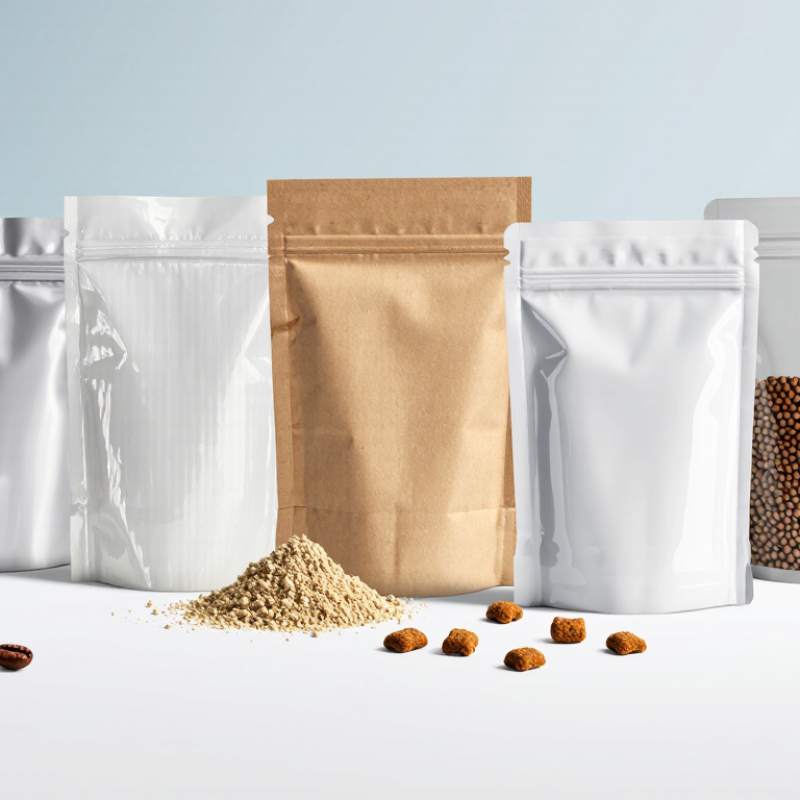
Stand-up barrier pouches are flexible bags designed to stand upright on a shelf. A gusseted bottom creates stability after filling. Their layered film protects products from oxygen, moisture, light, and outside odors. The inner layer usually supports safe contact and reliable heat sealing. Outer layers add strength, printability, or protection from handling damage.

These pouches work through material selection and controlled sealing. A typical structure may combine plastic films, metallized layers, or aluminum foil. Each layer performs a different task. The barrier slows oxygen and water vapor from passing through the package. A zipper, spout, or tear notch can improve daily use. However, every opening feature may create another possible leakage point. Careful design matters.

From packaging trials, I have found that a pouch can look strong yet fail at the seal. Testing should include seal strength, drop resistance, compression, and moisture or oxygen transmission. Product conditions also matter. Powder, liquid, oil, and dry food may require different inner films. A stronger barrier is not always better if it reduces recyclability or makes production inefficient. Global buyers should request clear specifications, batch records, and compliance documents for the destination market. I would also inspect samples after filling, not only when they are empty. Real handling often reveals weaknesses that laboratory checks miss.


Which Barrier Materials and Structures Offer the Best Protection?

Top Stand Up Barrier Pouches for Global Buyers

Which Barrier Materials and Structures Offer the Best Protection?

Barrier performance begins with the product, not the pouch shape. Dry powders often need moisture control, while roasted foods may need oxygen and aroma protection. A practical structure can combine PET for print strength, EVOH or metallized PET for barrier, and PE or PP for sealing. Aluminum foil offers stronger light, oxygen, and moisture protection, but it can reduce recyclability and raise material impact.

Smithers’ 2023 market forecast estimates global flexible packaging could approach US$300 billion by 2028. The Flexible Packaging Association reported approximately US$42.9 billion in U.S. flexible packaging sales for 2023. These figures show market scale, but they do not prove that every multilayer pouch is suitable. Testing matters more than appearance.

Buyers should request oxygen transmission rate, water vapor transmission rate, seal strength, and drop-test results. ASTM F1249 supports moisture testing, while ASTM D3985 measures oxygen transmission. A foil laminate may protect sensitive contents better than metallized film, especially in humid shipping routes. However, metallized PET can offer a useful balance for less demanding products. EVOH performs well against oxygen, yet high humidity can reduce its effectiveness. That detail is easy to overlook.

In my experience, suppliers sometimes recommend the thickest structure instead of the right structure. That approach adds cost and waste. A better specification considers shelf life, filling temperature, transport climate, pouch size, and closure design. No single barrier material wins every application. Testing should challenge the pouch under realistic storage conditions, not only in a laboratory.

How to Compare Pouch Sizes, Closures, and Custom Features?

For global buyers, comparing stand-up barrier pouches starts with the product, not the artwork. Measure fill weight, density, and headspace before choosing dimensions. A pouch holding 500 grams of powder may need a different shape than one holding 500 milliliters of liquid. Small details matter. Record width, height, bottom gusset, and usable volume separately. I have seen teams select a pouch by outside size, then discover poor shelf stability. That mistake is expensive.

Closure choice should match opening habits and shipping conditions. A press-to-close zipper supports repeated use, while a tear notch suits quick access. For thicker contents, test zipper alignment after filling. Spouts can improve liquid handling, but their position affects pouring and pallet efficiency. Ask for samples with the intended seal width. A strong film cannot rescue a weak seal. Check leak resistance, drop performance, seal cleanliness, odor transfer, and print durability. Results should be documented, not remembered from a sales call.

Custom features deserve a cost and risk review. Rounded corners, laser scoring, windows, handles, and degassing valves each change performance or production complexity. Barrier selection also depends on oxygen, moisture, light, and aroma sensitivity. Request technical data, tolerances, and batch consistency from the converter. I would not approve a large order from one attractive sample. Production variation happens. Recheck dimensions, closure torque, and seal strength during pilot runs. Sometimes a simpler pouch performs better, though that conclusion can feel less impressive.

Top Stand Up Barrier Pouches for Global Buyers? - How to Compare Pouch Sizes, Closures, and Custom Features?

Pouch Format Typical Finished Size
(Width × Height + Bottom Gusset)
Approximate Fill Capacity Common Product Applications Typical Barrier Structure Closure Options Useful Custom Features Best Selection Criteria
Small Stand-Up Pouch 100–140 × 140–190 mm
Bottom gusset: 25–40 mm
50–250 g, depending on product density Spices, snacks, confectionery, pet treats, samples and powdered supplements Typical multilayer PET/PE or PET/metalized PET/PE construction; aluminum foil may be used when stronger light and oxygen protection is required Press-to-close zipper, tear notch, or heat-sealed top Rounded corners, euro hole, clear window, matte or gloss finish, laser scoring and resealable zipper Choose according to product bulk density, serving size, shelf-life target and retail display requirements
Medium Stand-Up Pouch 140–190 × 180–260 mm
Bottom gusset: 35–50 mm
250–750 g or ml Coffee, dried fruit, nuts, grains, sauces, detergents and household products Common options include PET/PE, PET/CPP, BOPP/PE and metalized laminate structures selected for the product’s moisture, oxygen and light sensitivity Press-to-close zipper, slider zipper, spout, tear notch, or child-resistant closure where required Degassing valve for roasted coffee, hang hole, transparent panel, easy-open notch, custom gusset and high-definition rotogravure or digital printing Balance internal volume with shelf footprint; confirm zipper performance after filling and transportation
Large Stand-Up Pouch 180–260 × 240–360 mm
Bottom gusset: 45–70 mm
750 g–2 kg or L Pet food, flour, rice, bulk snacks, laundry products and refill packs High-strength laminated films such as PET/PE, PET/CPP or metalized PET/PE; thicker sealant layers are commonly used for heavier contents Wide press-to-close zipper, slider zipper, spout, reinforced heat seal, or child-resistant zipper Carrying handle, reinforced top seal, corner spout, anti-slip surface, laser tear opening and high-load bottom gusset Verify drop resistance, seal strength, top-load performance and ergonomic handling for the intended fill weight
Spouted Stand-Up Pouch 120–240 × 180–330 mm
Bottom gusset: 35–65 mm
100 ml–2 L Liquid foods, beverages, sauces, detergents, personal-care products and industrial liquids Film and sealant layers are selected for liquid compatibility; high-barrier PET/PE, PET/CPP or foil-based laminates are commonly used Heat-sealed fitment with screw cap, flip-top cap or tamper-evident closure Angled spout, wide-mouth fitment, measuring cap, child-resistant cap, laser scoring, handle and retort-compatible construction where applicable Match spout diameter, cap torque, seal geometry and chemical compatibility with the filling line and product viscosity
High-Barrier Foil Pouch 100–260 × 140–360 mm
Bottom gusset: 30–70 mm
100 g–2 kg Oxygen-sensitive foods, coffee, powdered ingredients, nutraceuticals and products requiring strong light protection Typical foil laminate such as PET/AL/PE or PET/AL/CPP; exact structure depends on sealing temperature, stiffness and product requirements Press-to-close zipper, one-way degassing valve, tear notch or permanent heat seal Metalized appearance, low-oxygen packaging, degassing valve, reinforced seals, anti-static layer and custom barrier specification Use when protection from light, oxygen and moisture is more important than microwave transparency or visual product visibility
Clear-Window Barrier Pouch 120–220 × 170–320 mm
Bottom gusset: 30–60 mm
150 g–1.5 kg Granola, coffee beans, dried foods, pet treats, snacks and decorative products Barrier film laminate with a localized transparent window; the window area generally provides less protection than the opaque barrier area Press-to-close zipper, tear notch, heat seal or optional valve for coffee applications Custom window shape, matte or gloss surface, spot varnish, euro hole, zipper and high-contrast printing around the window Define the acceptable exposed area and shelf-life requirement before selecting a transparent window design
Child-Resistant Stand-Up Pouch 140–240 × 180–330 mm
Bottom gusset: 35–65 mm
100 g–1.5 kg, depending on the product Household chemicals, selected health products, regulated products and items requiring restricted access Multilayer PET/PE, PET/CPP or foil laminate selected according to chemical resistance, barrier needs and regulatory requirements Certified child-resistant zipper or closure system, usually combined with a tear notch or permanent seal Tamper-evident feature, warning panel, tactile identification, opaque film, reinforced seal and compliance labeling area Confirm the required child-resistance standard in the destination market and obtain test documentation before commercialization
Retort Stand-Up Pouch 130–250 × 180–340 mm
Bottom gusset: 35–70 mm
150 g–1.5 kg Shelf-stable meals, sauces, seafood, meat products and other commercially sterilized foods Retort-rated structures may include PET/AL/CPP or specialized high-temperature laminate; adhesive and sealant systems must be suitable for retort processing Usually a permanent heat seal; spouts and zippers require specific retort-compatible designs Easy-open notch, rounded corners, spout, high-temperature ink system, reinforced seal and custom shape Validate retort temperature, time, pressure, product acidity, seal integrity and post-process shelf life through testing

Comparison note: Capacity ranges are indicative and vary with product density, particle size, filling method and the selected pouch dimensions. Barrier performance should be specified using measurable targets such as oxygen transmission rate, water vapor transmission rate, light protection, seal strength and required shelf life.

What Standards Should Global Buyers Check Before Purchasing?

When buying stand up barrier pouches, global buyers should verify performance, not just attractive artwork. Smithers’ “The Future of Global Flexible Packaging to 2028” estimates the market will approach 202.5 billion dollars by 2028. That growth increases supplier choices, but also increases quality risks. Ask for a current technical data sheet, material structure, thickness tolerance, and production-lot traceability. A certificate alone is not proof.

Barrier performance needs measurable evidence. Request ASTM F1249 results for water vapor transmission and ASTM F1927 results for oxygen transmission. Seal strength should be tested under ASTM F88 conditions. ASTM F1929 or ASTM F2096 can help identify channel leaks and gross leakage. Testing should come from an ISO/IEC 17025-accredited laboratory. Do not accept unnamed “high barrier” claims. They are too vague.

Food-contact compliance depends on the destination market. Buyers should check applicable rules, such as EU Regulation 1935/2004, EU plastic materials rules, or relevant FDA requirements. Ask for migration testing, ink and adhesive declarations, and confirmation for the intended product. ISO 22000 certification can support food-safety controls, while ISO 9001 indicates a documented quality system. It does not guarantee pouch performance. I would also inspect filled samples after transport simulation, heat exposure, and repeated handling. This step is often skipped, and that is a mistake. A pouch may pass a laboratory test yet fail beside a sharp zipper edge.

How global buyers should read this chart: The values are practical procurement benchmarks commonly used for high-barrier flexible packaging, not universal legal limits. Lower OTR and WVTR values indicate stronger protection against oxygen and moisture. Buyers should request laboratory test reports using comparable conditions: oxygen transmission rate under ASTM D3985 or ISO 15105-2, and water vapor transmission rate under ASTM F1249 or ISO 15106-3. Final specifications should also cover seal strength, leak integrity, food-contact compliance, migration, print durability, and recyclability requirements for the destination market.

How to Select a Reliable Stand-Up Barrier Pouch Supplier?

Top Stand Up Barrier Pouches for Global Buyers

How to Select a Reliable Stand-Up Barrier Pouch Supplier?

A reliable supplier should begin with your product, filling line, and distribution route. Ask which barrier structure protects against oxygen, moisture, light, or aroma loss. A pouch for roasted coffee needs different protection from one used for dry snacks. Small details matter.

Request technical data before discussing price. Check film layers, pouch dimensions, seal strength, and material thickness. Ask for migration testing, food-contact documentation, and a certificate of analysis for each production batch. Independent laboratory reports add confidence. They also reveal weak claims.

In packaging trials, I have seen attractive samples fail during heat sealing. Test pouches on your actual equipment. Fill them, stack them, and transport them through realistic temperature changes. Examine leaks, wrinkles, seal contamination, and zipper performance. A supplier should provide traceability from raw materials to finished cartons. Clear lead times and corrective-action records are valuable, too.

Do not judge reliability from fast replies alone. A polished sample can mislead. Request a pilot order and inspect it carefully. Confirm print registration, color consistency, odor, and carton protection. Suppliers should explain limitations without hiding behind vague promises. I would also review their quality controls through an audit or video inspection. One point deserves reflection: the lowest quoted price may become expensive after rejected goods, delays, or product damage.